
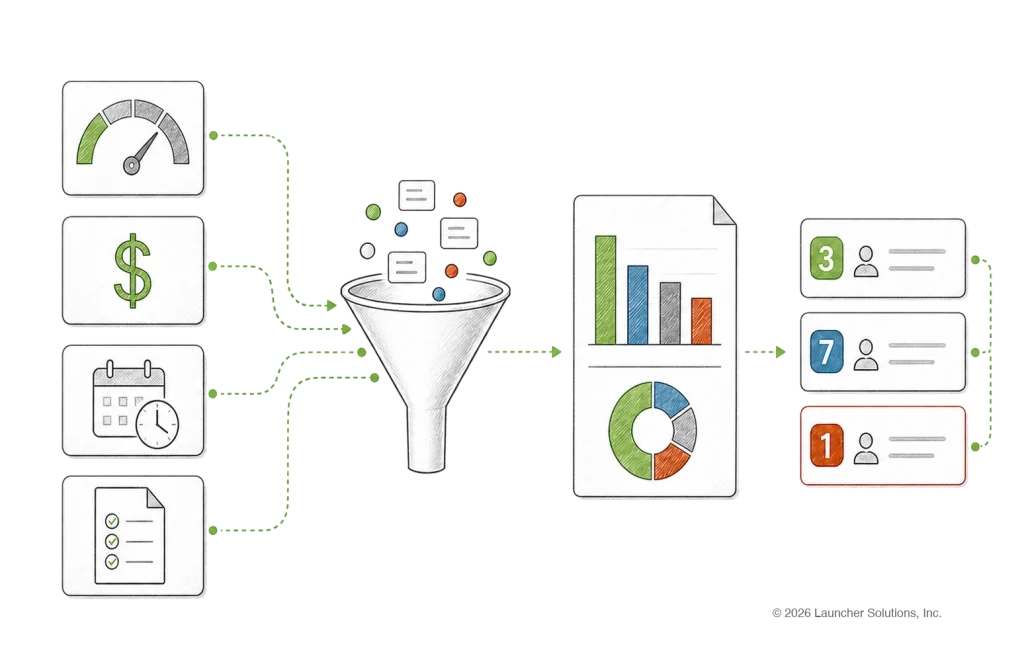
Queues organize the work
Loan origination produces a steady stream of applications, decisions, exceptions, documents and follow-up. appTRAKER connects operational reporting with configurable work queues so teams can understand the pipeline and focus on the items that need attention.
A queue can identify applications by:
Teams work from views configured for underwriting, verification, stipulations, documents, funding or another process. The queue makes the result of your lending policy actionable by showing the relevant work to the people responsible for it — the policy itself lives in configurable workflows.
Reporting provides operational context
Reporting draws on the application and workflow information appTRAKER already holds, so operational questions are answered from the same record the team is working in:
Queues and reports use the same operational data, giving teams one current view of the work. The available questions and data depend on the implementation, and specific reports, exports and delivery options are confirmed for each customer.
From an event to a person’s worklist
A workflow recognizes that a document is missing. A rule identifies an exception. A queue places that application in front of the appropriate team, and reporting provides the broader view around the activity.
Event → Rule → Queue → Owner → Action
That chain is the point. An exception nobody is assigned is an exception nobody resolves.
Built close to the lending operation
Reports and queues sit directly beside the applications, tasks, exceptions and outcomes they describe. They use origination data directly — applications, stages, tasks, exceptions, ownership — so the view a manager reads and the list a processor works from come from the same place.
That proximity is what makes the information act on the operation rather than just describe it: a number in a report and a queue an underwriter opens are two views of one record.
From lending activity to action
Your lending platform should do more than store applications. It should help people understand the operation and focus their attention where it matters.
appTRAKER connects operational reporting with configurable queues so lending teams can monitor activity, organize work and keep applications moving.
See the activity. Organize the work. Act on what matters.
Frequently asked questions about reporting and queues
Can different teams have different queues?
Yes. Queues can be configured around the work and criteria relevant to each team, so underwriting, verification, documents and funding each see their own view.
Can a queue be scoped to an individual as well as a team?
Yes. Assignment and responsibility are part of what a queue can filter on, so a view can cover a team, a role or one person’s outstanding work.
Do queues update the credit decision?
No. They organize applications and tasks. Decisions, rules and approvals remain governed by the applicable lending workflow.
What does the reporting cover?
Origination data held in appTRAKER: what is entering the pipeline, where applications stand, what remains outstanding and who owns the next action. Requirements for custom reports, exports or downstream analytics are confirmed during implementation.
Can reporting data reach our own analytics environment?
Yes. Supported exports and interfaces can deliver origination data to a lender reporting or analytics platform. The data, timing and direction are defined for the implementation — see API & data exchange.