Applications from the dealer channel
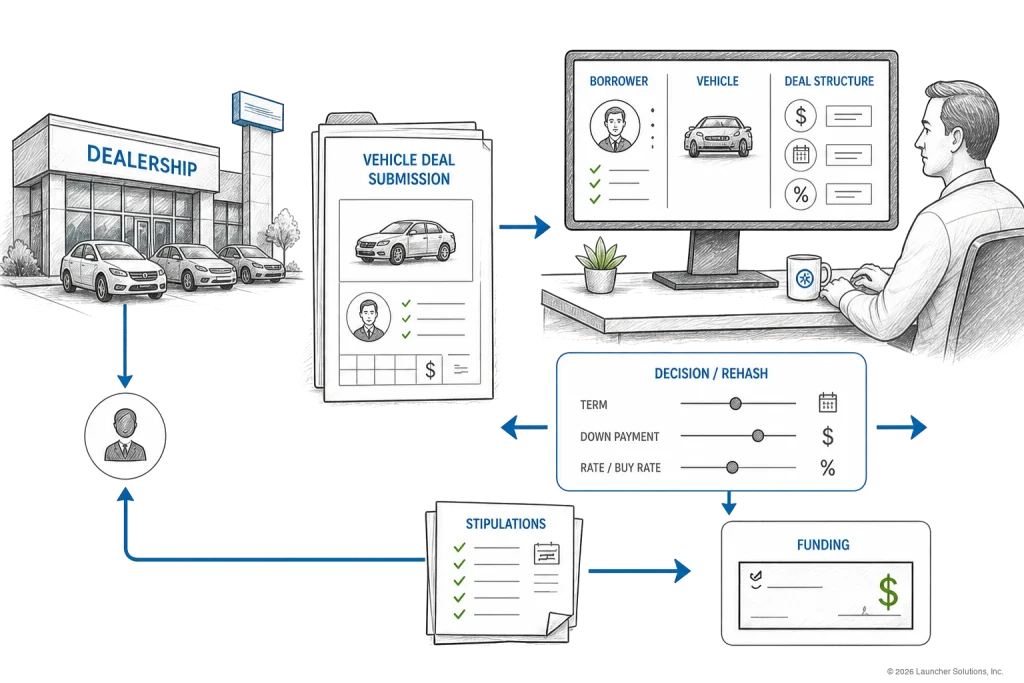
Indirect auto is a transaction moving through several organizations at once. The dealer is working with a buyer. The lender is evaluating the applicant, vehicle and proposed structure. Documents and stipulations are already beginning to matter. appTRAKER keeps that work connected.
Dealer applications can enter appTRAKER through:
The source can determine the data received, workflow used, staff queue, response path and dealer communication. Applications from Dealer Portal, Dealertrack, RouteOne and authorized APIs feed directly into the configured underwriting workflow.
Lenders running both channels can read how the two operating rhythms differ on auto lending, or in our guide to direct vs. indirect lending.
Review the borrower, vehicle and deal together
An indirect decision depends on more than a credit score.
appTRAKER can bring together applicant and co-applicant information, bureau data, income and employment, identity and fraud signals, dealer information, vehicle data, valuation, history, trade-in, requested terms and the full proposed structure.
Configured rules can evaluate credit policy, DTI, PTI, LTV, program eligibility, pricing, approval authority, collateral limits and funding requirements. Eligible applications can move automatically; exceptions can route to an underwriter with the relevant context.
Vehicle information where underwriting needs it
Supported providers can supply VIN details, vehicle attributes, book values and history information. LAUNCHER works with provider options that may include J.D. Power, Kelley Blue Book, CARFAX, AutoCheck, VINData and VINAudit.
Provider coverage and returned data vary. The implementation defines which source is used, when it is called and how the lender applies the result.
Rehash and deal structure
Permitted adjustments to term, down payment, amount financed, payment, LTV and collateral can be evaluated within lender policy.
Underwriters can review and revise allowed transaction information.
Transactions that still require judgment or an exception remain with staff.
Keep the dealer in the transaction
Dealer Portal gives authorized users a connected workspace to:
Applications received through Dealertrack, RouteOne or an API can still participate in the same appTRAKER workflow and, where configured, the same dealer-facing process.
Manage the relationship behind the deal
That distinction keeps a transaction tool from becoming a vague CRM claim.
Documents and funding
DOCS & FORMS keeps stipulations, generated forms, Form Packs, partner documents and eSign activity with the application.
Funding tasks can reflect the lender’s requirements for approvals, contracts, insurance, title or collateral documents, dealer information and other conditions. Staff and dealers see the decisions, terms, stipulations, documents and status relevant to their role, and lender-only underwriting work stays inside appTRAKER.
Downstream handoff
When the transaction reaches the lender booking or boarding point, supported interfaces can pass customer, loan, collateral and document information to the applicable core, servicing, accounting or content-management system.
appTRAKER manages origination. The downstream system manages the account after the handoff.
Why appTRAKER for indirect auto lending?
Built for the reality of indirect auto finance
Indirect auto finance is a three-party transaction. Consumer. Dealer. Lender. Each participant wants something different.
The consumer wants the vehicle. The dealer wants to complete the sale. The lender wants a transaction that satisfies its credit policy, collateral requirements, pricing strategy and risk appetite.
The technology has to bring those objectives together quickly enough for the deal to happen. appTRAKER provides the lending foundation for doing exactly that.
appTRAKER
Configurable, scalable loan origination built around your products, channels and credit policy.
Explore →myDEALER
Dealer relationship management, built into the origination workflow.
Explore →autoBOUGHT
Your virtual underwriter — automated, 24/7 credit decisioning.
Explore →launchPAD
Essential origination tools for startup lenders and new programs.
Explore →Fraud Intelligence
Identity, phone, location, address, and bureau signal intelligence at the point of decision.
Explore →Dealer Portal
Give your dealer network one connected place to submit, work, and close deals with your lending team.
Explore →autoBUILT
Configurable workflow automation for your origination process.
Explore →appTRAKER DOCS & FORMS
Document management, form generation, Form Packs and eSign — built into the LOS.
Explore →Frequently asked questions about indirect auto lending
What is indirect auto lending?
Indirect auto lending is vehicle financing that reaches the lender through a dealer rather than directly from the borrower. The dealer collects the application and submits it, and the lender underwrites the applicant, the vehicle and the proposed deal structure.
Can appTRAKER receive applications from more than one dealer network?
Yes. Dealer Portal, Dealertrack, RouteOne, APIs and other supported sources can feed the origination process. The exact data and response path vary by connection.
Can our own platform submit applications through an API?
Yes. Authorized systems can submit applications and, where configured, receive decisions back through supported APIs.
Can dealers upload stipulations?
Authorized Dealer Portal users can provide supporting documents and work with applicable stipulations in the configured transaction.
Does automated decisioning remove underwriters?
No. Lenders decide which applications are eligible for automated handling and which must be referred for review, verification or authority.
Does appTRAKER support vehicle valuation?
Yes. Supported providers can return book values and vehicle attributes for use in collateral review. The provider, timing and decision use are defined by the implementation.
Can the platform support non-prime indirect lending?
appTRAKER can be configured around lender-defined risk tiers, scorecards, pricing, verification, collateral and approval rules, including programs that require more exception handling and documentation.
Can appTRAKER connect funded loans to our servicing or core platform?
Yes. Supported interfaces can pass customer, loan, collateral and document information to the applicable core, servicing, accounting or content-management system at boarding.